
How to Teach Your Child English at Home with Songs: A Simple Guide for Parents
By David Choi · Updated September 25, 2026
“How can I teach my child English at home?” It is one of the most common questions parents ask, especially parents who are still learning English themselves. The good news: you do not need to be a teacher, and you do not need perfect English. Songs are one of the easiest and most enjoyable places to start.
This guide explains why songs help children learn English, then gives you a simple step-by-step plan you can start today, with free songs to use.
Can kids learn English from songs?
Yes, songs really do help. Research shows that people pick up new words just from listening to songs, and studies with language learners have found that singing new words can help people remember them and say them more clearly. A large 2024 review of 60 studies from 23 countries found that most reported positive results from using songs to teach languages, while warning that many of those studies were not designed carefully enough to prove it.
In other words: songs are a great way to learn words and sounds, and they work best together with real conversation, books and play.
Why songs help children learn English
- Repetition without boredom. A child who would never repeat a word 20 times will happily sing it 20 times.
- Melody helps memory. Words set to a tune are easier to remember. Most adults still know songs from childhood.
- Rhythm teaches pronunciation. Songs show where the stress falls in English words and sentences.
- Actions show meaning. Pointing to your nose while singing “nose” explains the word without any translation.
- It feels like play. Children learn best when they are having fun and do not feel tested.
How to teach your child English at home with songs: step by step
- Choose one song about everyday life. Greetings, colors, numbers and body parts are ideal first topics.
- Watch it together. Sit with your child for the first few times and react: point, smile, copy the actions.
- Play it every day for a week. Repetition matters more than variety. Children love hearing favorite songs again.
- Add the actions. Wave during the Hello Song, point to your eyes and ears during the Face Song, count on your fingers during the 1-10 Song.
- Sing it without the video. In the car, in the bath, while tidying up. This moves the words from the screen into daily life.
- Use the words in real life. “Good morning!” at breakfast. “What color is this?” at the park. “Left foot, right foot!” while putting on shoes.
- Add a new song, and keep the old ones. Every week or two, add one more song. Keep singing the earlier ones so the words stay fresh.
Ten minutes a day beats one hour a week. Short, daily moments with English are more effective than long lessons.
Which English songs should you start with?
Start with songs about things your child sees and does every day. These five are a great first set:
Hello Song
Greetings: say hello and wave. The perfect first English song.
Watch the video and see the lyrics →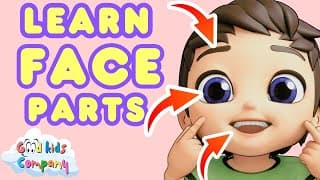
Face Song
Body parts: eyes, ears, nose, mouth, teeth, chin and cheeks, with pointing.
Watch the video and see the lyrics →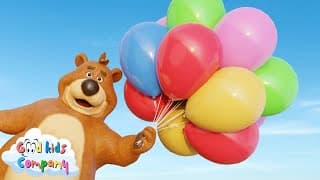
The Color Song
Colors: red, green, blue, yellow and more. Easy to practice anywhere.
Watch the video and see the lyrics →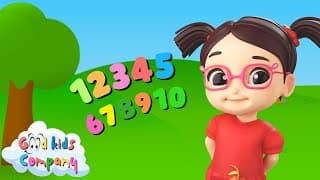
1-10 Song: Learn to Count
Numbers: count from one to ten, faster and faster.
Watch the video and see the lyrics →
Ready for more? See our full list of 15 easy English songs for kids, grouped by topic with the words each song teaches.
Tips for parents who don’t speak English well
- Learn together. Your child seeing you learn and enjoy English is a powerful example.
- Use the lyrics. Every song page has the full English lyrics, so you can read along and check words.
- Don’t worry about your accent. Your child will also hear native English speakers in the songs.
- Mix languages freely. It is fine to explain a word in your own language, then sing it in English.
- Celebrate trying. Praise your child for singing along, not for getting every word right.
What age should kids start learning English?
There is no age that is too early for songs. Babies can listen from the start, toddlers begin copying words and actions, and preschoolers can learn whole songs by heart. The best time to start is when it can be relaxed and fun, not a lesson your child has to sit through.
Frequently asked questions
How can I teach my child English at home?
Start with short, daily routines built around songs. Choose one song about everyday life, such as greetings, colors or body parts, play it every day for a week, do the actions together, and use the new words in real life. Add a new song every week or two.
Can kids learn English just by listening to songs?
Songs help children learn English words and sounds, and research supports using them. To start speaking, children also need to use the words: sing along, answer simple questions and play in English with you.
How much time should my child spend learning English each day?
Around 10 to 15 minutes a day is enough to start, as long as it happens every day. Short, regular moments with English songs work better than long lessons once a week.
What are the benefits of songs for children learning English?
Songs repeat words many times, make them easier to remember through melody, show how English words are pronounced and stressed, and connect words to meaning through actions. Above all, songs make learning English fun.
Do I need to speak English well to teach my child?
No. You can learn alongside your child, read the lyrics on each song page, and let the songs provide the native English pronunciation. Your encouragement matters more than perfect English.
Sources
- Incidental vocabulary learning through listening to songs, Studies in Second Language Acquisition (Cambridge University Press)
- Using songs to teach second or foreign languages to preschool, primary and secondary school learners: a systematic review, System (ScienceDirect, 2024)
- Singing songs facilitates L2 pronunciation and vocabulary learning, Languages (MDPI)
More articles
- Bedtime Songs for Toddlers and Babies: Lullabies, Lyrics and a Simple Bedtime Routine
Gentle bedtime songs and lullabies with lyrics, plus a simple bedtime routine for toddlers.
- Calming Music for Kids: Gentle Songs for Sleep, Quiet Time and the Classroom
Gentle lullabies, soft piano songs and long sleep mixes for bedtime, quiet time and the classroom.
- English Songs for Kids: 15 Easy Songs to Help Children Learn English (with Lyrics)
15 easy songs, grouped by topic, with the English words each one teaches.