
Nursery Rhyme Meanings: The Real Stories Behind Humpty Dumpty, Mary Had a Little Lamb and More
By David Choi · Updated September 29, 2026
Search for any nursery rhyme meaning and you will find dramatic stories: kings, wars, plagues. A few of them are true. Many were invented long after the rhymes were written, with no old book or document to back them up.
Here is what is actually known about five classic nursery rhymes we sing, from who wrote them to where they came from, and which famous stories are only legends.
Humpty Dumpty meaning: was he really an egg?
The rhyme never says Humpty Dumpty is an egg, and that is the point. It began as a riddle: who sat on a wall, had a great fall, and could not be put back together by anyone? The answer is an egg. An American writer, William Carey Richards, wrote in 1843 that he had known it as a riddle with that answer when he was a child.
The earliest known printed version appeared in 1797, in Samuel Arnold’s book Juvenile Amusements. The name itself is older: in the 1600s, “humpty dumpty” was a drink of brandy boiled with ale, and by the 1700s it was slang for a short, clumsy person. Lewis Carroll drew Humpty Dumpty as a talking egg in Through the Looking-Glass in 1871, and the picture stuck.
What about the famous theories?
- King Richard III: suggested by a writer in 1930, with no evidence from the king’s own time.
- A cannon in Colchester, England, in 1648: promoted by the town’s tourist board from 1996 and popularized in a 2008 book, but no historical document supports it.
- A siege machine at Gloucester in 1643: proposed in 1956 by a professor, and not accepted by historians.
Humpty Dumpty Song
Our Humpty Dumpty song sings the classic rhyme, then gives it a happy ending: “All of Humpty’s friends came to help instead, and found a way to put Humpty together again.”
Mary Had a Little Lamb: the true story?
Unlike most nursery rhymes, this one has a known author. Sarah Josepha Hale published the poem in Boston on May 24, 1830.
Was Mary real? In 1876, a 70-year-old woman named Mary Sawyer said the poem was about her: as a girl in Sterling, Massachusetts, she had taken her pet lamb to school. She also said a young man named John Roulstone saw it happen and wrote the first verses. No paper proving that was ever found, so the story rests on her memory. Sterling still has a small lamb statue in her honor.
The rhyme has one more claim to fame. In 1877, Thomas Edison recited it into his new phonograph, making “Mary Had a Little Lamb” the first English verse ever recorded.
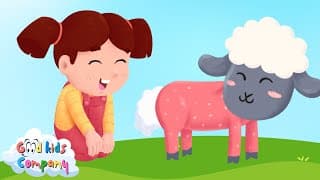
Mary Had a Little Lamb
Our version includes the verse many people forget: “Why does the lamb love Mary so? She loved the lamb, you know.”
Twinkle Twinkle Little Star: who wrote it?
“Twinkle, Twinkle, Little Star” is a poem by the English writer Jane Taylor. It was called “The Star” and was published in 1806 in Rhymes for the Nursery, a book she wrote with her sister Ann. The original has five verses; almost everyone only knows the first.
The tune is even older: a French melody called “Ah! vous dirai-je, maman,” first published in 1761. Mozart wrote a set of twelve piano variations on it, and the same tune is used for the traditional Alphabet Song and “Baa, Baa, Black Sheep.”
Twinkle Twinkle Little Star
The first verse, sung slowly and gently, the way most families know it.
Itsy Bitsy Spider origin
No one knows who wrote “The Itsy Bitsy Spider.” The earliest known printing is from 1910, in an American travel book by Arthur Walbridge North, where it was called the “Spider Song.” The version we sing today became standard in the late 1940s through American folk song collections for children.
It has different names around the world: “Incy Wincy Spider” in the United Kingdom and “Incey Wincey Spider” in Australia. The meaning is simple and hopeful: the rain washes the spider out, the sun comes back, and the spider climbs up again. It is a song about not giving up.
The Itsy Bitsy Spider
Try the hand motions: fingers climbing up the spout, wiggling down like rain, and arms making a big sun over your head.
Hush Little Baby meaning
“Hush, Little Baby” is a traditional lullaby from the Southern United States. Like most folk songs, its author and date are unknown. Song collectors wrote down a version in Virginia in 1918, and many families have their own verses.
The meaning is sweet: a parent promises a gift to calm a crying baby, and every time something goes wrong (the mockingbird will not sing, the diamond ring turns to brass) there is a new promise. The last line gives the real message: “You’ll still be the sweetest little baby in town.” Whatever happens, the child is loved.
If you searched for “Hush Little Baby” and found a pop song instead, that is because the lullaby has inspired others, such as “Mockingbird” by Inez and Charlie Foxx in 1963 and Eminem’s “Mockingbird” in 2004, which borrows its opening lines.
Hush Little Baby
The traditional lullaby with all its verses, from the mockingbird to the horse and cart.
Do nursery rhymes have dark meanings?
Some old rhymes do mention real events, but most “dark meanings” you read online were added much later. The best-known example is “Ring Around the Rosie.” People often say it is about the plague, but that explanation only appeared in the middle of the 1900s, centuries after the rhyme, and nursery rhyme experts such as Peter and Iona Opie did not accept it.
A simple test: if a story gives a rhyme a dramatic hidden meaning but names no old book, letter or record, treat it as a fun legend, not history.
For children, the meaning that matters is the one in the words: an egg that falls, a lamb that follows a friend, a star to wonder about, a spider that keeps trying. Sing them for what they are. For gentle rhymes to end the day, see our bedtime songs for toddlers.
Frequently asked questions
What is the meaning of Humpty Dumpty?
Humpty Dumpty began as a riddle, and the answer is an egg: something that falls and cannot be put back together. Popular theories that it is about King Richard III or a cannon in Colchester have no historical evidence behind them.
Is Mary Had a Little Lamb a true story?
Possibly. Sarah Josepha Hale published the poem in 1830. In 1876, Mary Sawyer of Sterling, Massachusetts, said it was about her pet lamb following her to school as a girl, but there is no evidence beyond her own memory.
Who wrote Twinkle Twinkle Little Star?
Jane Taylor, an English poet, wrote the words. The poem, “The Star,” was published in 1806 in Rhymes for the Nursery, written with her sister Ann Taylor. The tune comes from a French melody first published in 1761.
Is Hush Little Baby a sad song?
No. “Hush, Little Baby” is a lullaby about a parent comforting a baby with promises of gifts. It ends by telling the child they will always be “the sweetest little baby in town,” whatever happens.
Do nursery rhymes have dark meanings?
Most do not. Many of the dark stories told about nursery rhymes, like “Ring Around the Rosie” being about the plague, appeared long after the rhymes and are not supported by historical evidence.
Sources
More articles
- Action Songs for Kids: Dance and Movement Songs for Toddlers and Preschoolers
Movement songs to copy, dance songs for parties and a freeze dance game, for toddlers, preschoolers and the classroom.
- Circle Time Songs for Toddlers and Preschool: Hello, Good Morning, Learning and Clean Up Songs
Hello and good morning songs, learning songs and a clean up song, plus a simple 15-minute circle time plan.
- Learning Songs for Toddlers: The Best Songs for 1, 2 and 3-Year-Olds
Our best learning songs for 1, 2 and 3-year-olds, sorted by age, plus easy ways to get more learning out of each one.
- Bedtime Songs for Toddlers and Babies: Lullabies, Lyrics and a Simple Bedtime Routine
Gentle bedtime songs and lullabies with lyrics, plus a simple bedtime routine for toddlers.
- Calming Music for Kids: Gentle Songs for Sleep, Quiet Time and the Classroom
Gentle lullabies, soft piano songs and long sleep mixes for bedtime, quiet time and the classroom.
- English Songs for Kids: 15 Easy Songs to Help Children Learn English (with Lyrics)
15 easy songs, grouped by topic, with the English words each one teaches.
- How to Teach Your Child English at Home with Songs: A Simple Guide for Parents
A step-by-step plan for parents, with the songs to start with and tips if your own English isn’t perfect.